What makes Horse Camp different
Small groups, horse care before riding, real trail time, and the deeper horsemanship behind Tree House Farm's day and overnight Horse Camps.
Horse Camp is one of the most visible Tree House Farm programs in summer, but it is not a shorthand for the whole farm. It is the focused horsemanship path inside a much broader place.
The distinction became clear in 2021. Farm Camp moved among animals and chores across the working farm. Horse Camp stayed intentionally small and centered the full process of spending a day with horses.
The horse comes before the ride
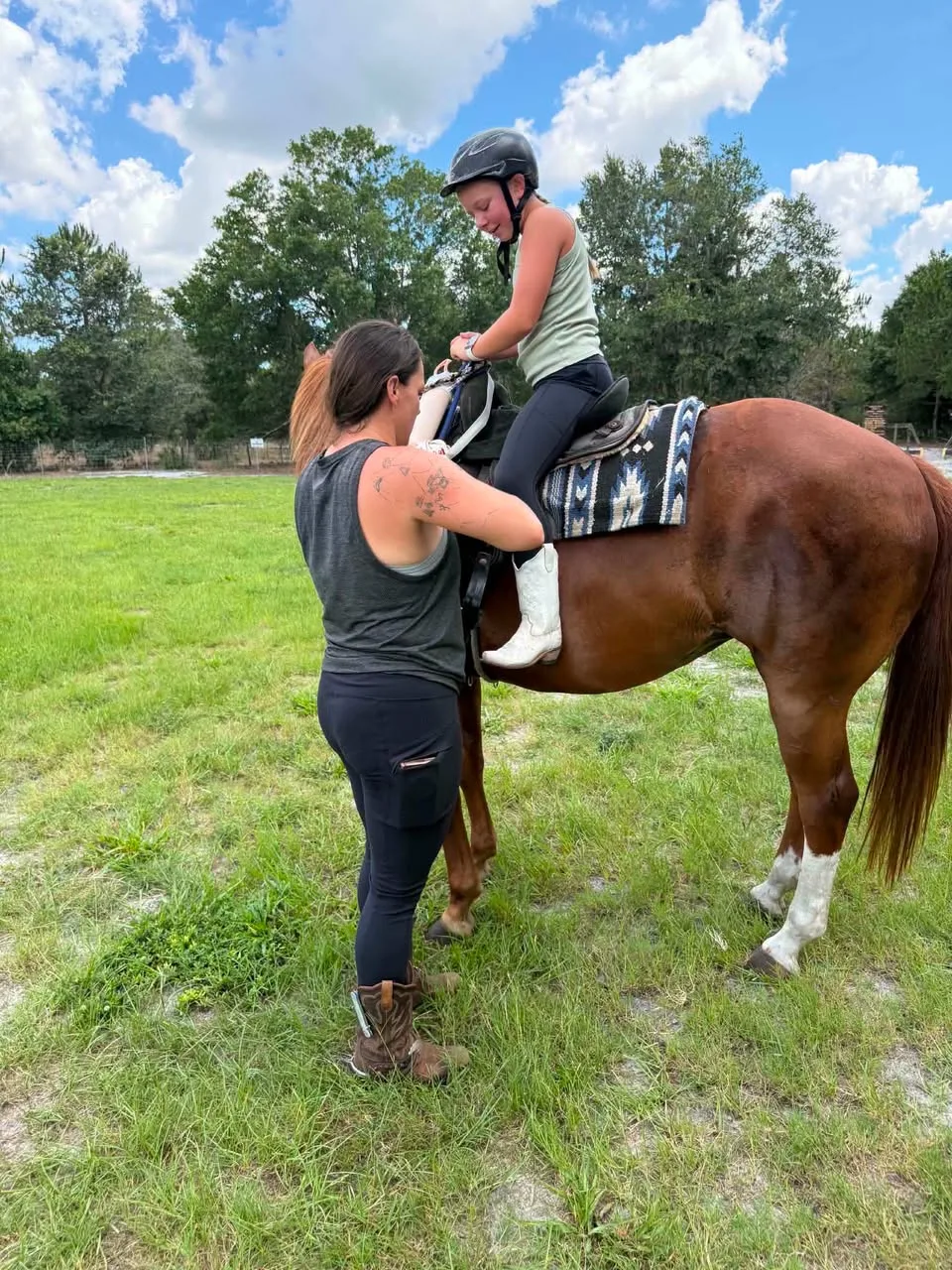
Camp can begin with catching and grooming. Campers learn the parts of the horse, check and use tack, prepare safely, and understand what happens before anyone gets in the saddle.
That preparation changes the meaning of the ride. The horse is no longer a vehicle waiting at the trailhead. Campers have already spent time noticing behavior, handling equipment, and participating in care.
Small groups make the work possible
Historical Horse Camp posts often limited sessions to only a few children. The exact number may change, but the reason stays important.
Horsemanship needs attention. Rider experience, confidence, horse temperament, weather, footing, and the planned trail all affect the day. Small sessions let the farm match people and horses more thoughtfully and make adjustments when someone needs another explanation or a steadier pace.
That is also why a message comes before a booking. Age alone cannot describe rider fit. The farm needs to know experience, comfort around horses, goals, and any relevant needs.
Trail time is earned through preparation
Recent camp updates show riders heading into wooded Florida trails and returning with another day “in the books.” Other sessions have included water riding and longer trail experiences.
The trail is not separate from the earlier care. Grooming, tacking, safe handling, loading or trailer awareness, riding position, and respect for the horse all travel out with the group.
Conditions matter too. Heat, rain, wildlife, footing, and a horse having an off day can change the route. A good camp day is not one where every planned activity happens at any cost. It is one where the group makes sound decisions and comes back understanding more.
Overnight Camp is its own experience
Tree House Farm’s seasonal overnight Horse Camp goes deeper than a longer day camp.
The 2026 program ran for four days and three nights. Public updates included water riding, rodeo attendance, line dancing, cow-sorting practice, and a night trail ride. Those activities describe that announced session, not a permanent checklist for every future camp.
What stays consistent is immersion. Overnight camp adds the rhythm of caring for horses and living around the group across several days. It asks for more independence, adaptability, teamwork, and trust.
Confidence comes from doing the whole thing
The visible accomplishment may be a trail ride. The deeper accomplishment can be much quieter: catching a horse calmly, remembering the tacking sequence, washing a horse after the ride, handling a mistake, helping another camper, or noticing when the horse needs something.
That is what makes Horse Camp different from a generic pony experience. Riding matters. The work around the ride is what turns it into horsemanship.